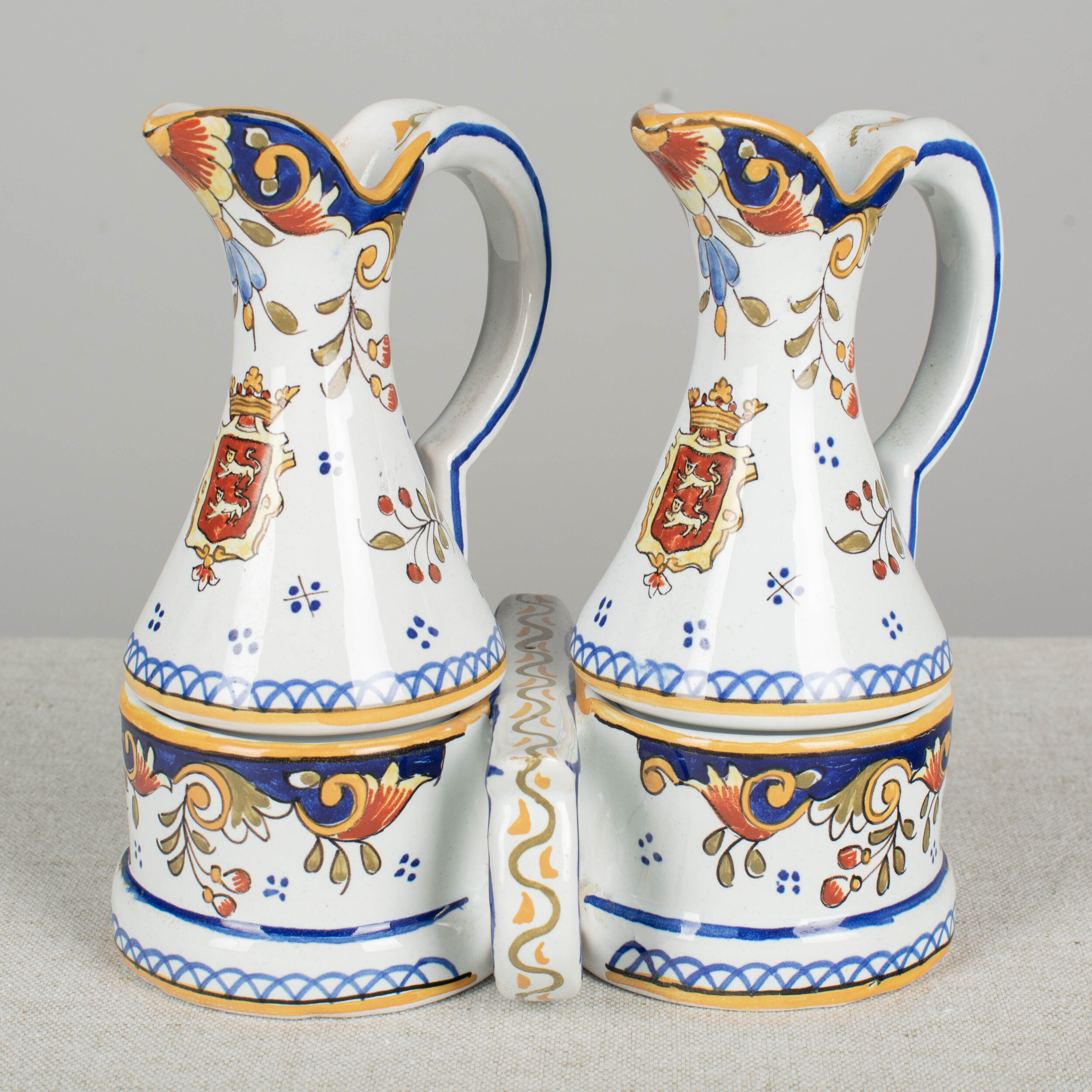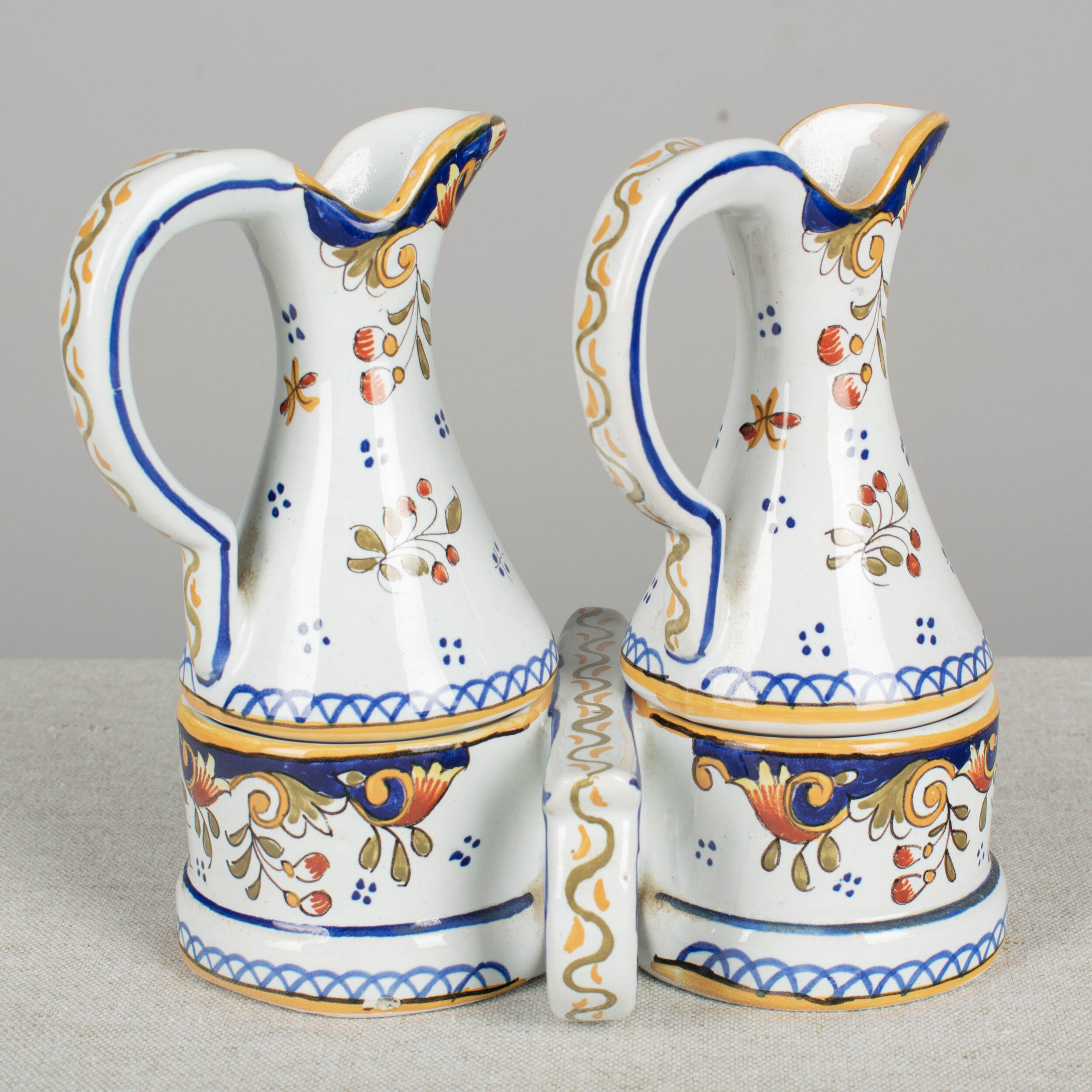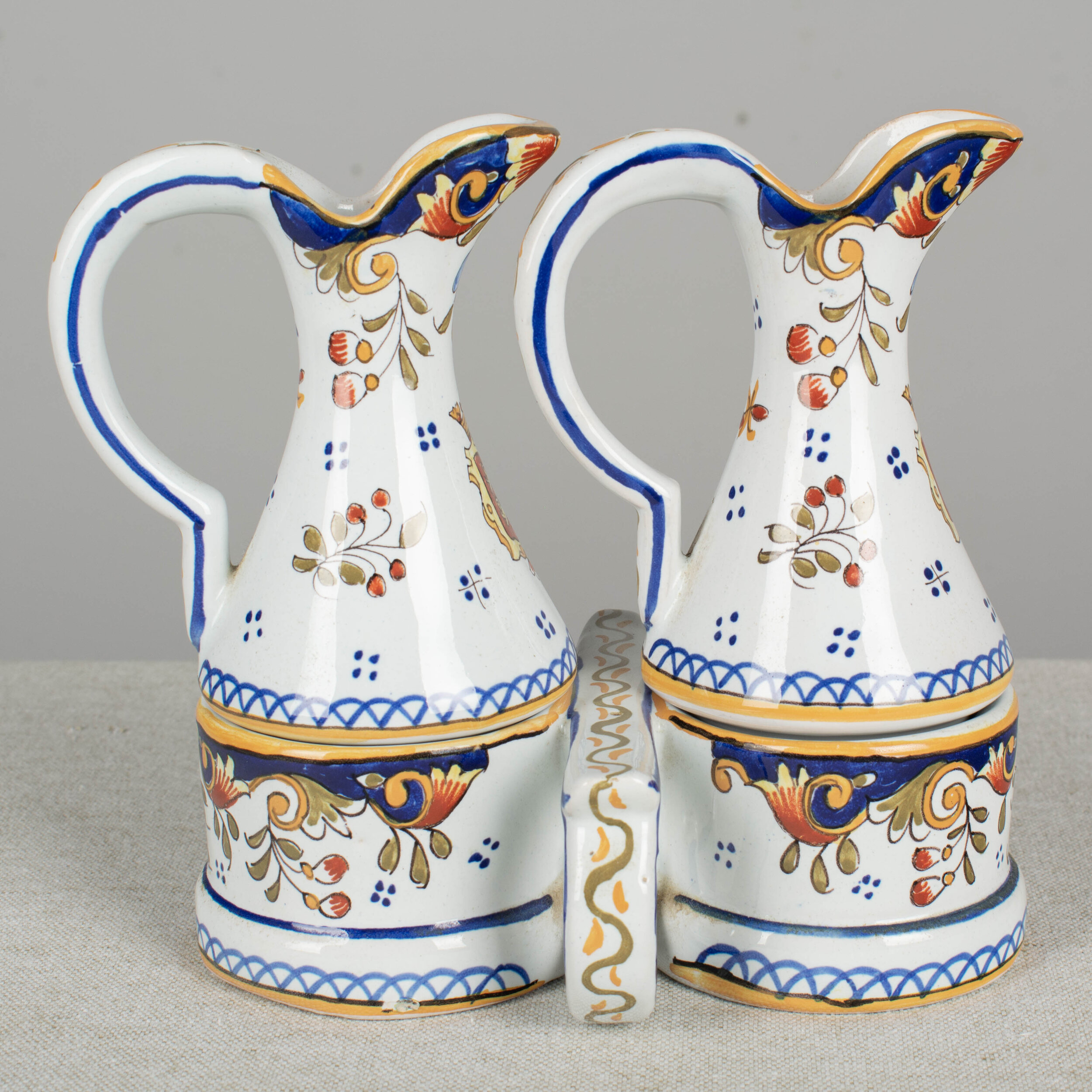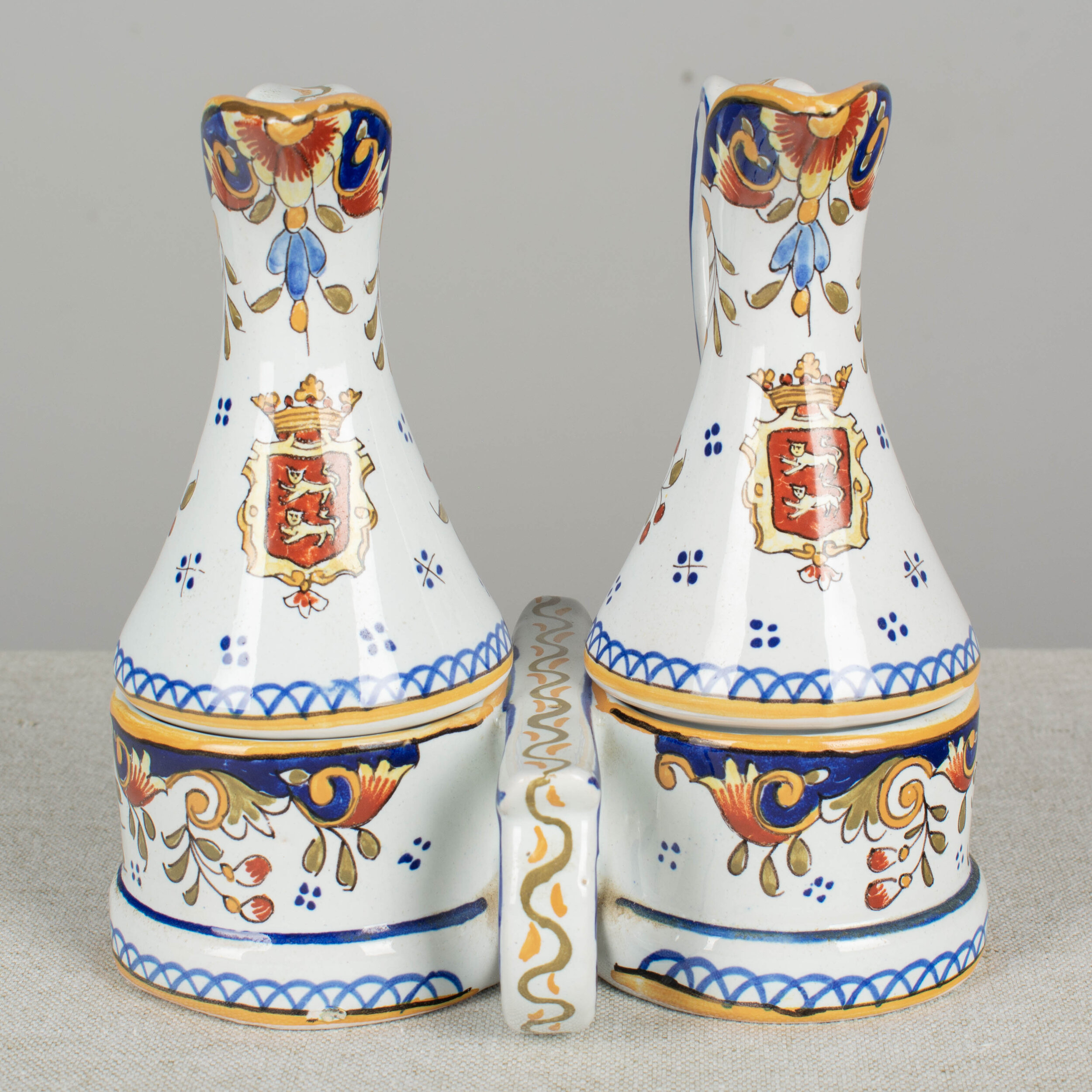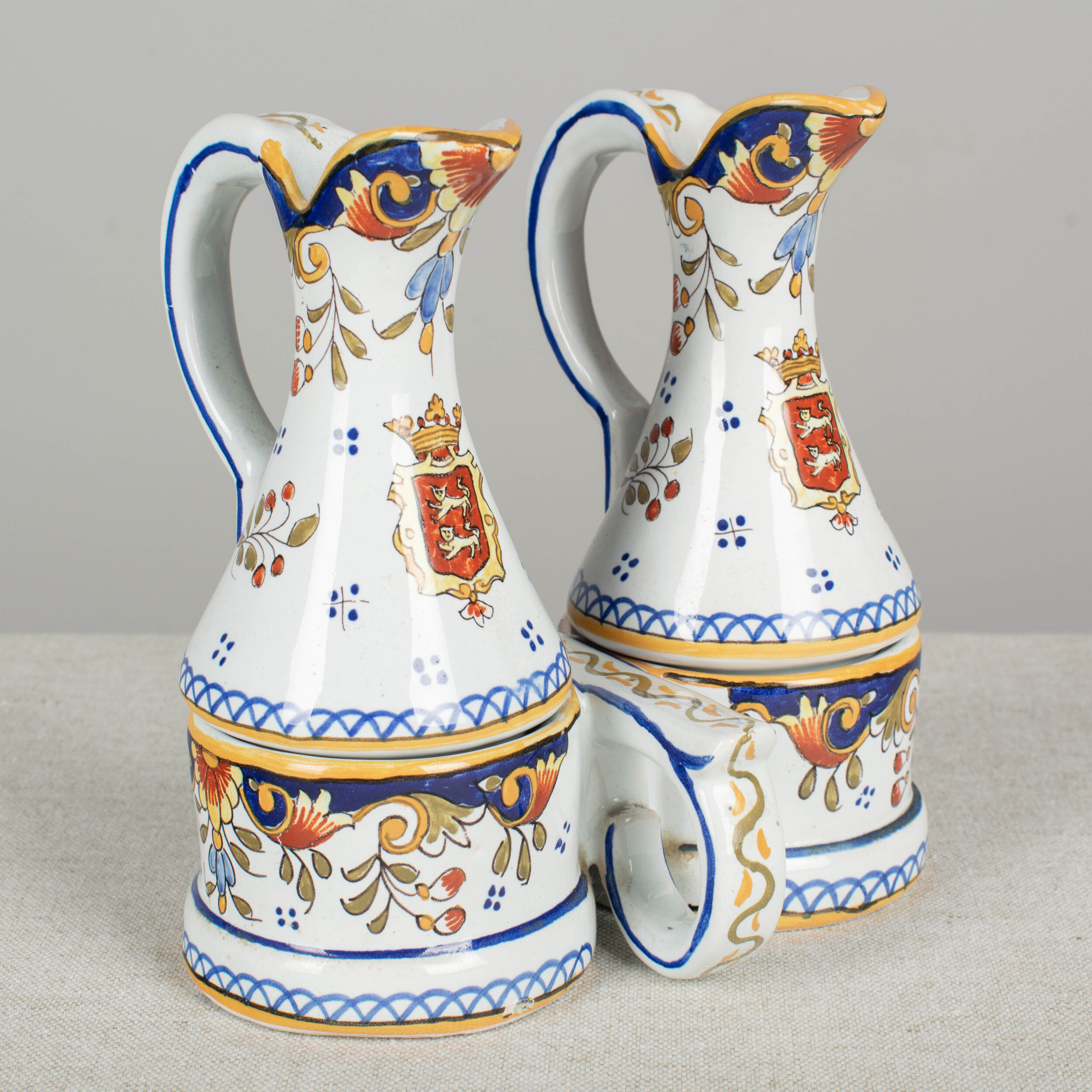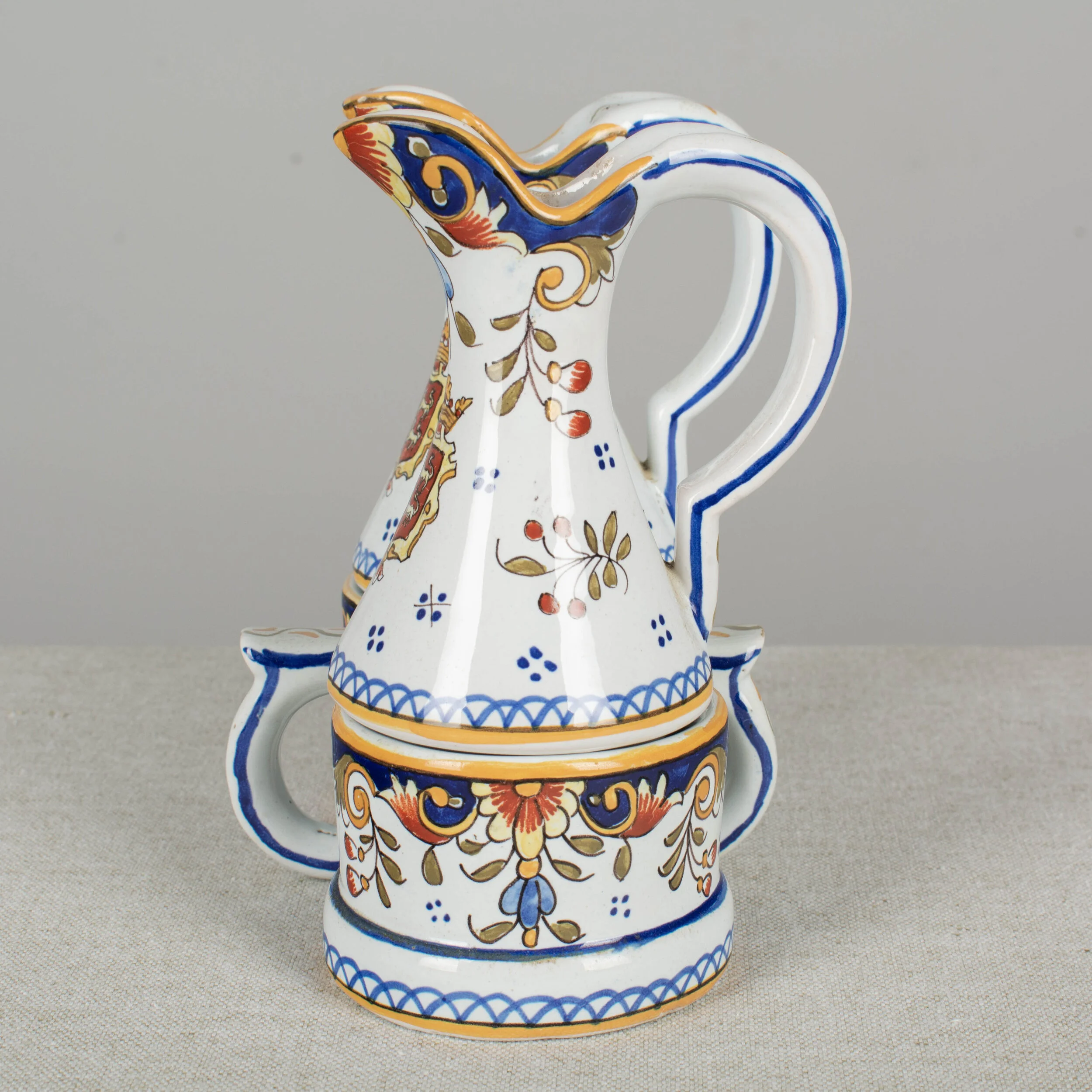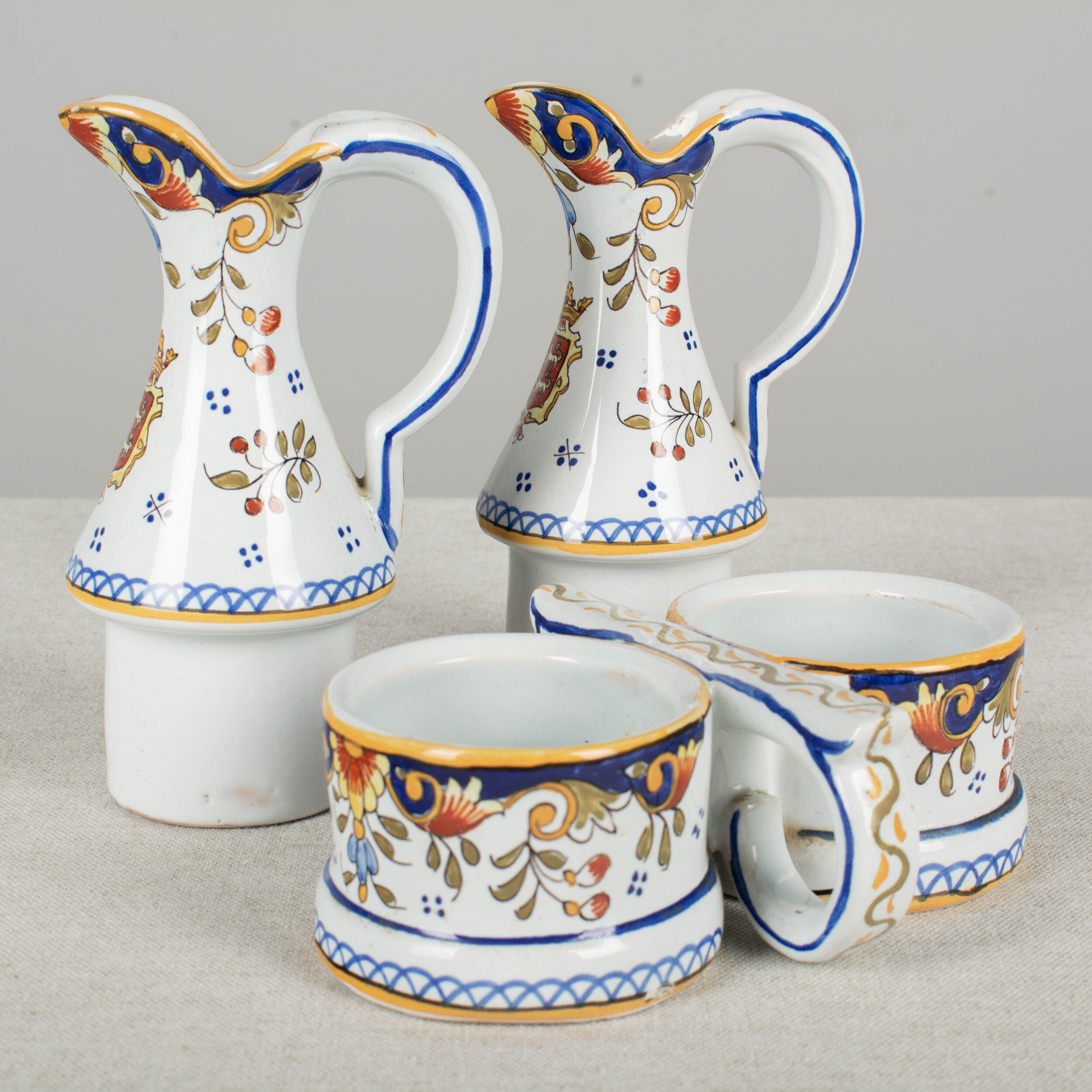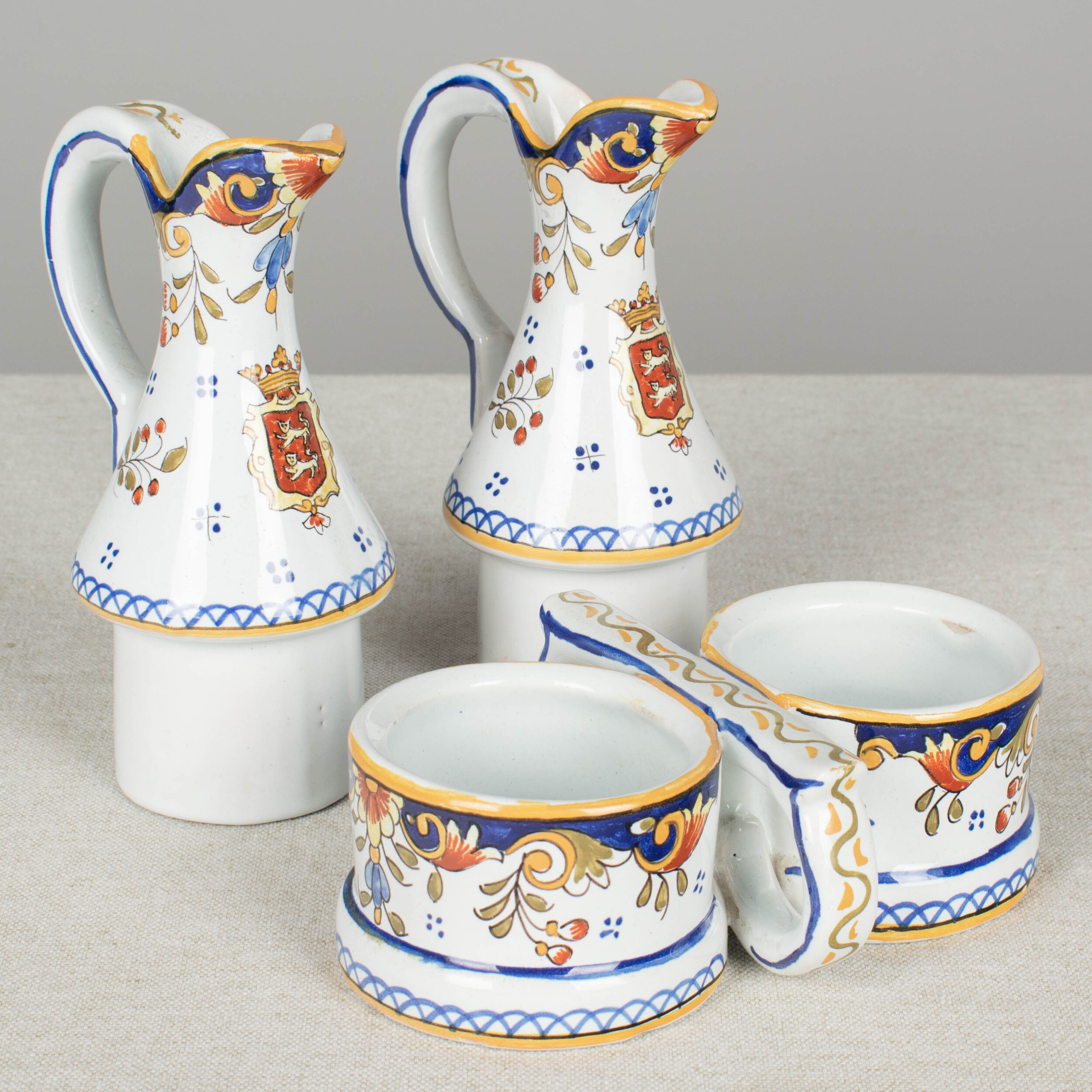
French Desvres Faience Cruet Set


French Desvres Faience Cruet Set
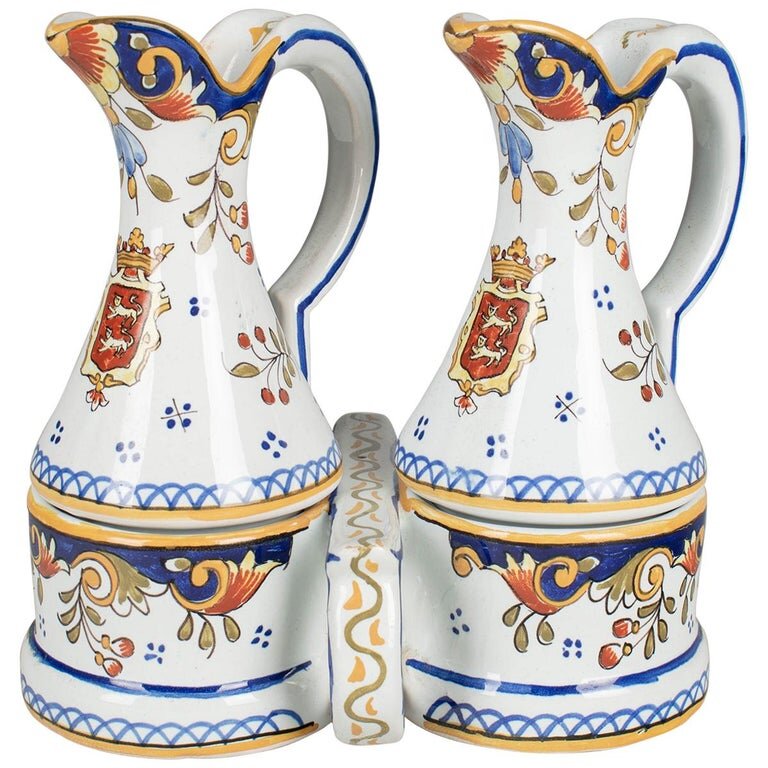
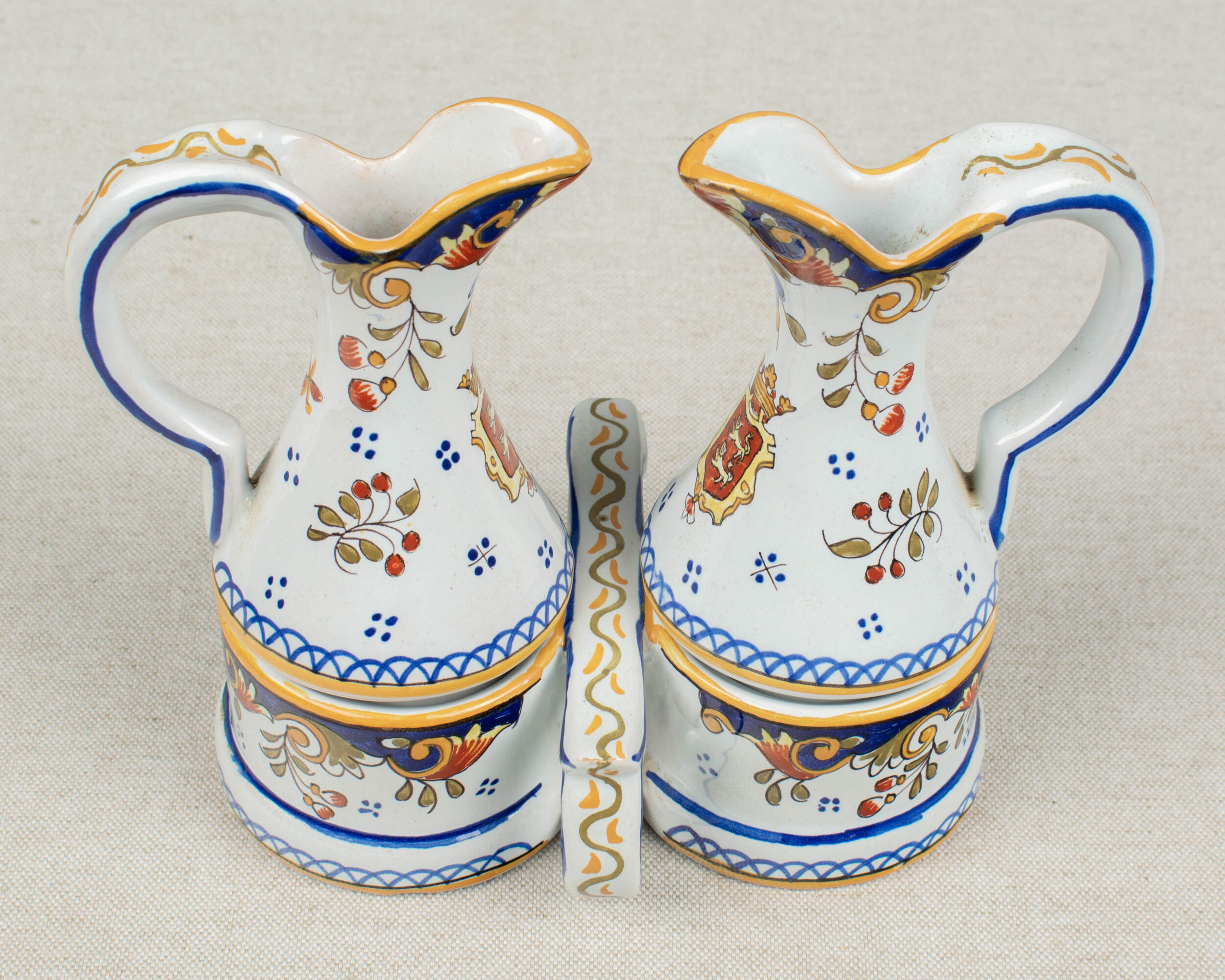
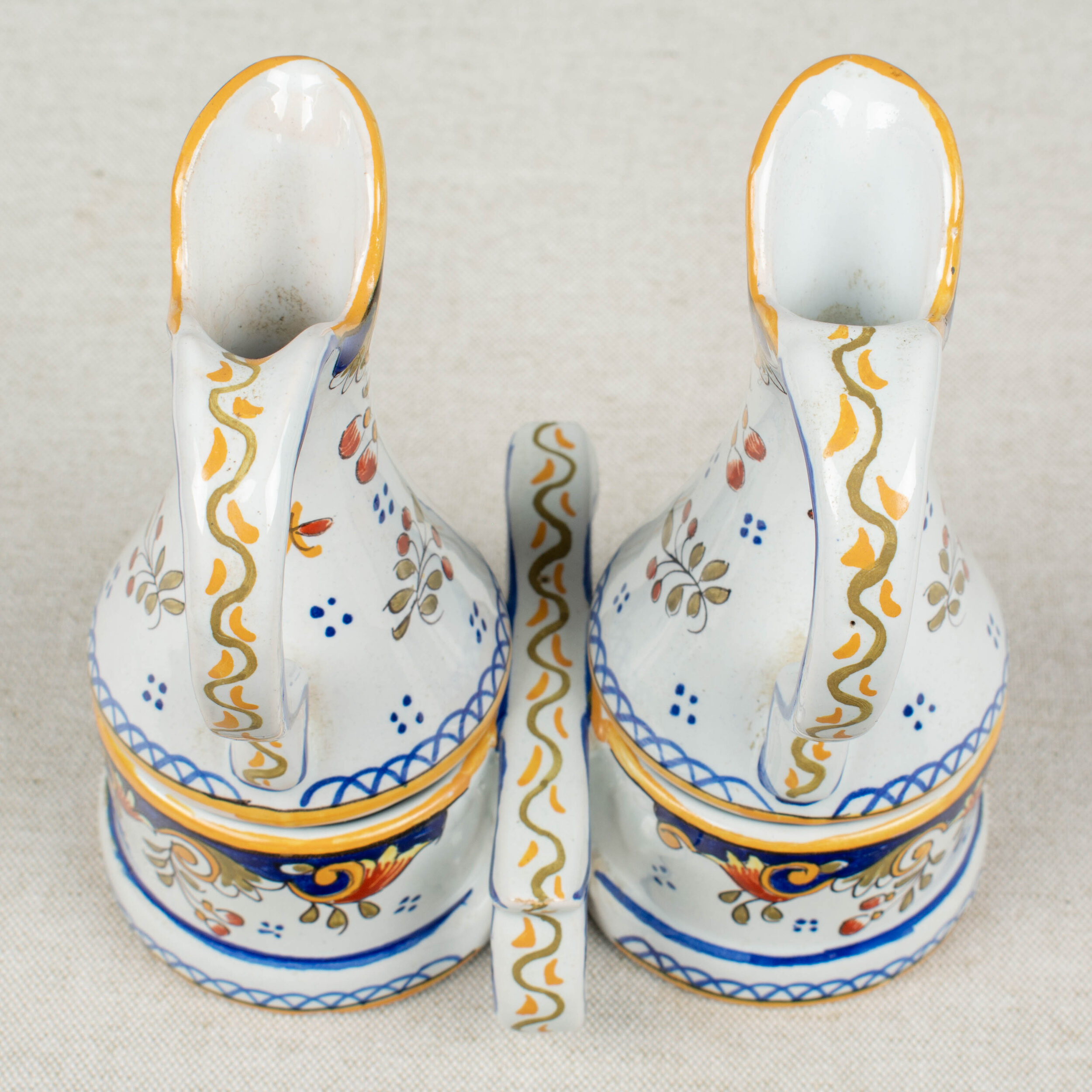
A French Desvres faience cruet set, with hand painted floral decoration in the traditional colors of blue yellow, green and orange. The base holds a pair of handled pitchers, for oil and vinegar, each decorated with the crest of Normandy, a red banner with two lions. Mark of the artist on the underside: JV, Jules Verlingues and the town Veulettes. Circa 1920-1930. 6”H x 6”W x 4.25”D. Shipping: $40
#75326
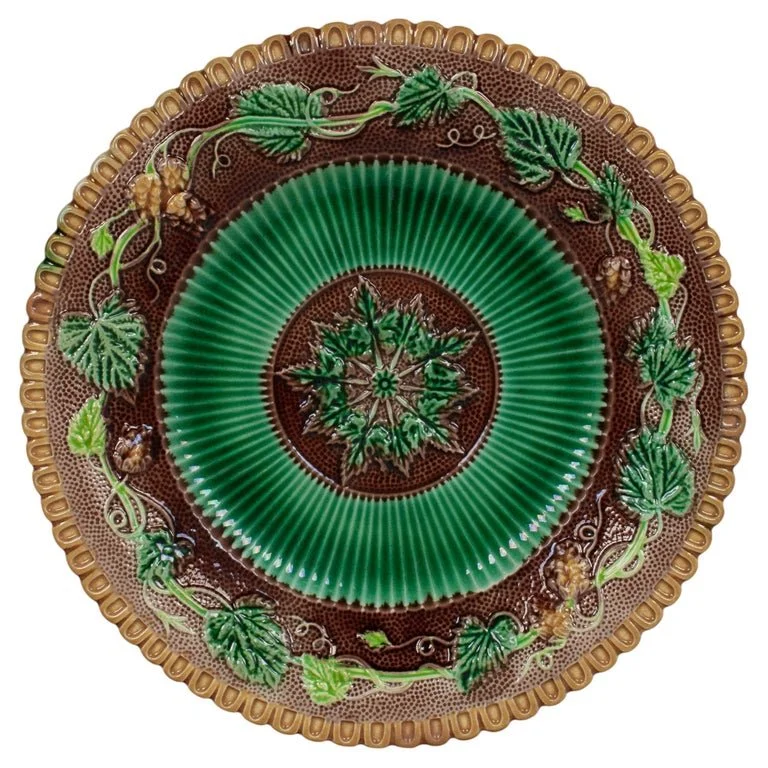
A 19th century English George Jones Majolica glazed ceramic plate with grapevine pattern in green and brown, center medallion and ochre banded rim. Mottled color on reverse side with painted design number to the thumbprint reserve: 1425. Another plate of the same pattern with slightly darker rim is also available. Please see other listings. Circa 1865-1875. Shipping: $40
9.5" Diameter x 1"H
#RD348B
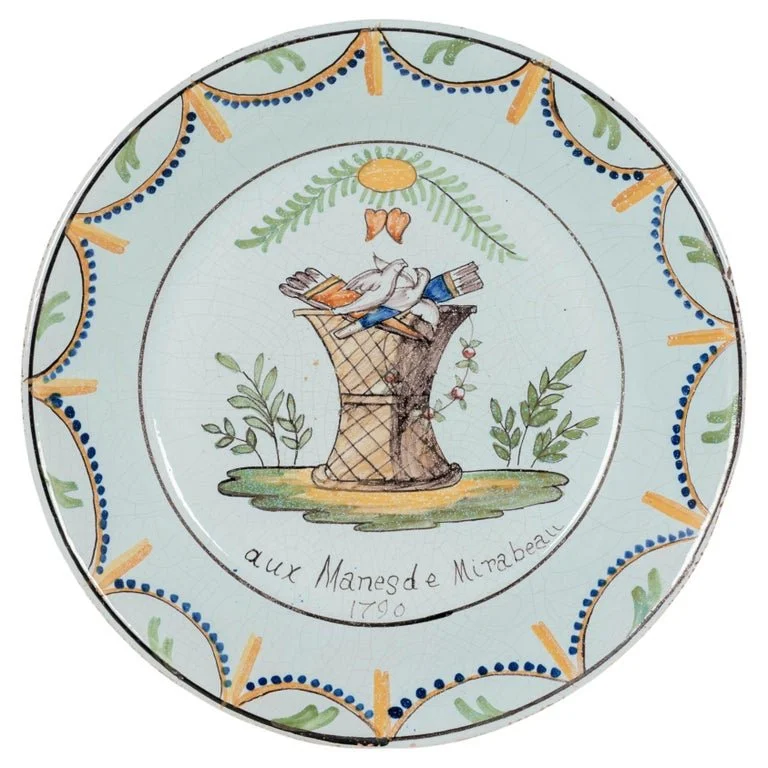
A late 18th century French faience plate entitled Aux Mans des Mirabeau 1790. Hand-painted decoration in green, orange and blue on a pale blue tinted ground with craquelure. This is a faience patriotique plate, a type of tin-glazed earthenware produced in France, often featuring imagery from the French Revolution. The text translates to "to the spirits of Mirabeau" honoring the French revolutionary leader Honoré Gabriel Riqueti, Comte de Mirabeau. These plates often depict symbols like wheat sheaves or weapons, representing the ideals of the revolution such as agriculture and strengt and were typically produced in faiencerie workshops in Nevers and Quimper. The back is unmarked but has three distinct small kiln support marks. In good condition for the age with minor glaze losses on the edges on rim. The perfect collectors item for a Francophile. Shipping: $40
Dimensions: 9" Diameter x 1.5"
#83485
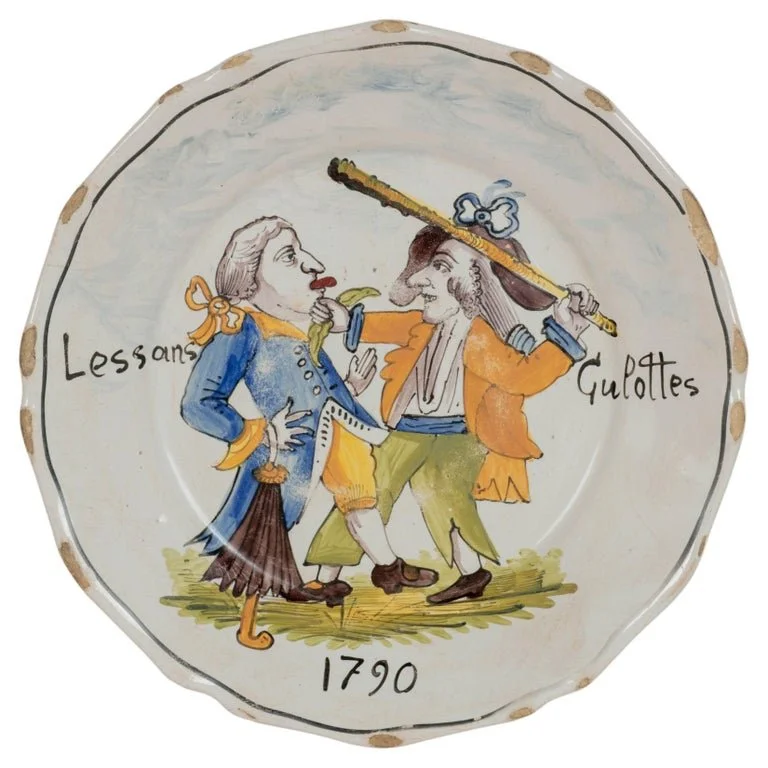
A late 18th century French faience plate with hand-painted decoration entitled Les Sans Culottes 1790. This is a faience patriotique plate, a type of tin-glazed earthenware produced in France, often featuring imagery from the French Revolution. The "sans-culottes" (without knee breeches) were the common working-class activists of the French Revolution who served as the primary driving force behind its most radical phases. The figure on the left wears aristocratic culottes, a tailored blue coat, and carries an umbrella, symbols of wealth and soft living. The figure on the right wears loose green pantaloons and an unbuttoned short jacket while raising a heavy wooden club to threaten or strike the wealthy man. These plates were typically produced in faiencerie workshops in Nevers and Quimper. The back is unmarked but has three distinct small kiln support marks. In good condition for the age with craquelure and glaze losses on the edges of scalloped rim. Shipping: $40
Dimensions: 9" Diameter x 1.5"
#83484
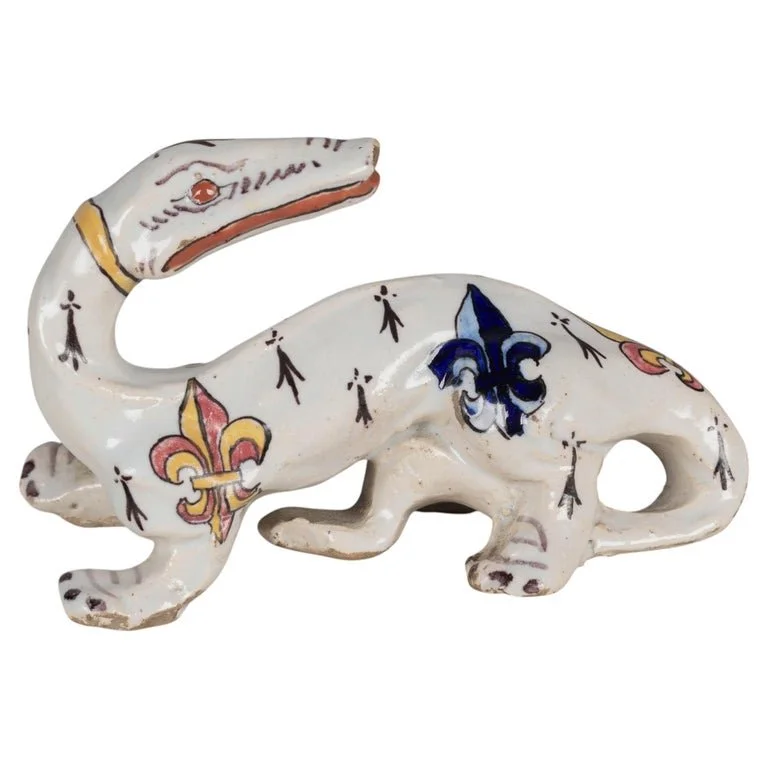
A 19th Century French Desvres faience whimsical salamander figurine by Fourmaintraux Freres. Hand-painted in typical colors of Desvres pottery in shades of blue, yellow, and red on white ground. The body features fleur-de-lis, representing French royalty, and it is interspersed with stylized ermine tails, the traditional heraldic symbol of the Duchy of Brittany. In good condition with minor glaze loss. The salamander motif was the personal emblem of King Francis I, historically symbolizing the ability to withstand and conquer fire. Makers mark to underside: FF. Circa 1870-1890. Shipping: $30
Dimensions: 4.25"W x 2.5"H x 2"D
#83465
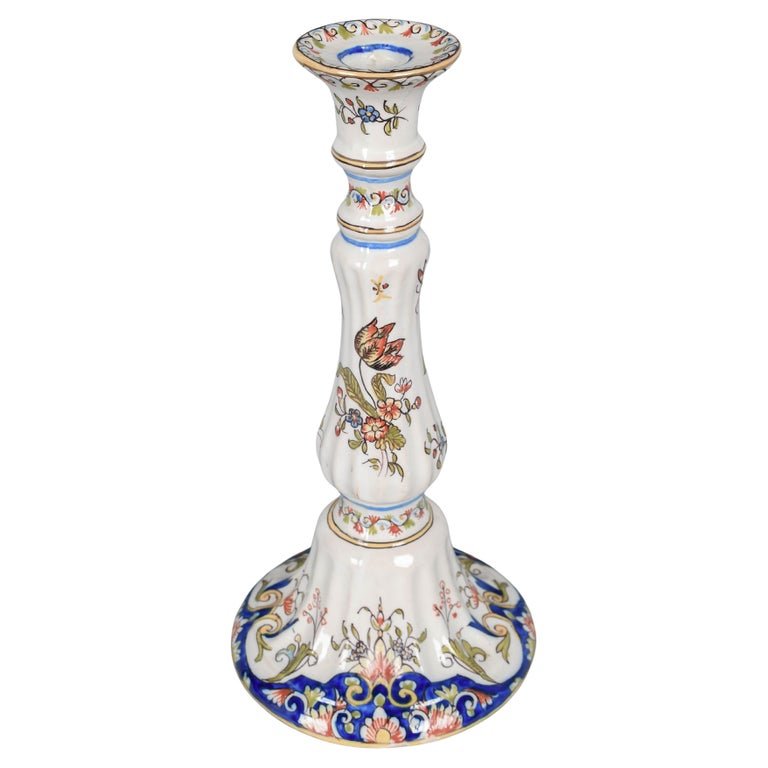
An early 20th century French faience candlestick from the faiencerie of Desvres, hand-painted with the traditional Rouen floral decor and colors of blue, yellow, orange and green. Fourmaintraux Freres mark underneath: FF Minor glaze loss and faint hairline. Circa 1900-1910. Shipping: $40
Dimensions: 5" Diameter x 11.75"H
#81522
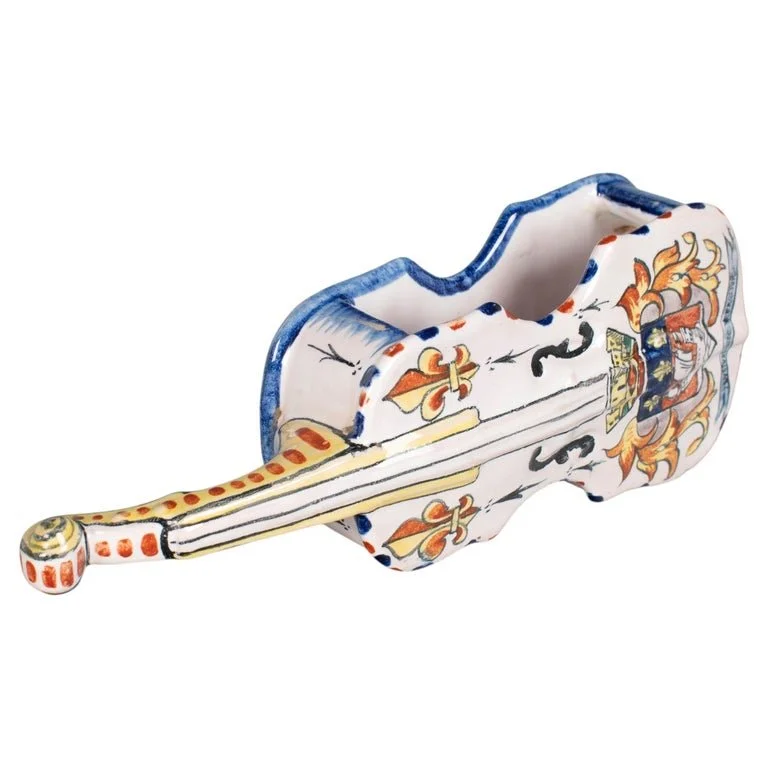
A late 19th century French faience decorative miniature vessel commonly known as a bouquetière or bud vase, in the shape of a violin. Hand-painted in blue, orange, yellow and green on white ground and decorated with a coat of arms with a sailing ship and a ribbon that reads Fluctuat nec mergitur (Tossed by the waves but does not sink). Made by Alcide Chaumeil, a significant French faience artist whose work is highly regarded by collectors, often mentioned alongside other notable producers such as Quimper, Desvres, and Malicorne. Unglazed back is marked CA. Circa 1890-1900. Shipping: $30
Dimensions: 7"W x 2.5"H x 1.25"D
Item id: 83455
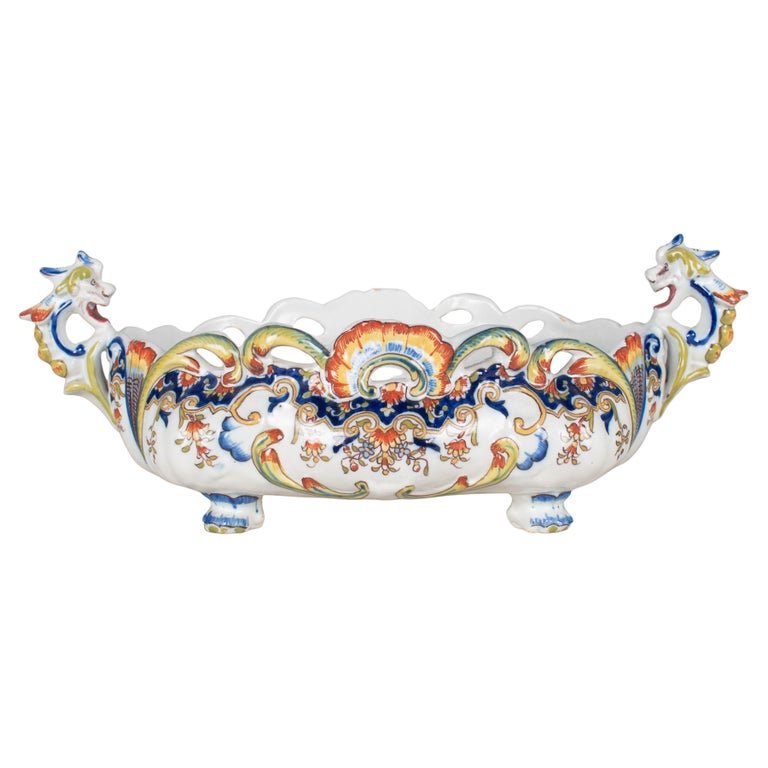
A 19th century French Desvres faience jardinière, or cache pot. Hand-painted in typical floral design with beautiful vivid colors of blue, green, yellow and red on white ground. A nice footed centerpiece bowl with oblong form and sculptural handles. Rouen mark to underside. Small chip and minor glaze losses. Circa 1900s. Shipping: $60
Dimensions: 17" x 8" x 6.5"H
#82199
A 19th century French faience small lidded pot for mustard, honey or jam. Hand-painted in beautiful vivid colors of blue, green, yellow and orange on white ground with craquelure glaze. Decorated with fleur-de-lis and stylized Breton ermine tail symbols. One side has a dog with a bone and text that translates: I am a dog, growling as I gnaw. I take my rest. A time will come—though it has not yet arrived—when I shall bite the one who has bitten me. In good condition with minor glaze loss. Made by Alcide Chaumeil, a significant French faience artist whose work is highly regarded by collectors, often mentioned alongside other notable producers such as Quimper, Desvres, and Malicorne. Marked underside: CA. Circa 1890-1900. Shipping: $30
Dimensions: 4.5"H x 3.25"W x 1.25"D
#83466
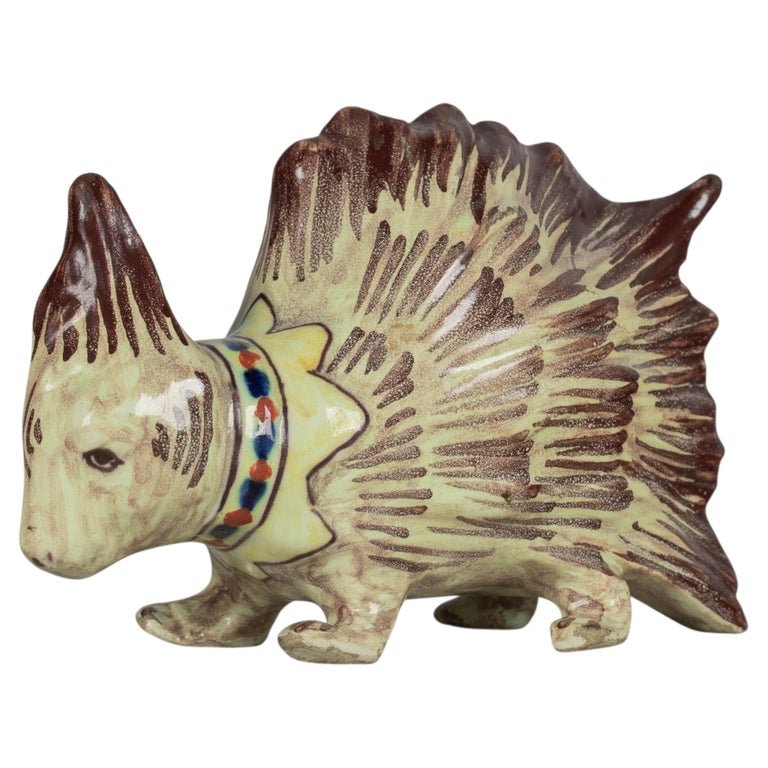
A late 19th century French Blois faience whimsical porcupine figurine. Hand-painted with greenish yellow body and brown needles, and decorated with a blue and red collar. The Porcupine (porc-épic) symbolizes the city of Blois and King Louis XII and is usually depicted in heraldic styles. The porcupine was the personal emblem of King Louis XII of France (and previously his grandfather, Louis of Orléans). It represented invincibility and deterrence. Because medieval legends claimed porcupines could shoot quills at attackers, the symbol warned enemies that the King was fiercely defended from both near and afar. Makers mark to underside: Blois. Circa 1880-1900. Sipping: $30
Dimensions: 4.5"W x 3.25"H x 2"D
#83464
A 19th century English George Jones Majolica glazed ceramic plate with grapevine pattern in green and brown, center medallion and ochre banded rim. Mottled color on reverse side with impressed makers mark. Another plate of the same pattern with slightly lighter rim is also available. Please see other listings. Circa 1865-1875. Shipping: $40
9.5" Diameter x 1"H
Please refer to photos for more details. Please visit our showroom in Winter Park, Florida.
#RD348A